
Introduction
O farming is changing the way we think about soil health. Instead of hauling organic waste to a compost pile, we can build soil fertility right where crops grow. This eliminates unnecessary labor and speeds up nutrient cycling.
For centuries farmers and gardeners have relied on composting as the gold standard for improving soil. But what if there’s a better way? Research shows that in-place decomposition can improve soil structure, boost microbial activity and reduce carbon loss.
This article will show you how to improve soil fertility without traditional composting. We’ll break it down, give you the science and show you why this is a game changer for regenerative agriculture.
The Science of In-Place Composting
In-place composting, also known as sheet composting or direct mulching, mimics natural ecosystems. In forests organic matter decomposes where it falls creating nutrient rich topsoil. When applied to farming this method minimizes nutrient loss and healthier plants.
The Benefits
- Less labor: No need to turn or transport compost.
- Better soil microbiome: Beneficial fungi and bacteria thrive.
- Faster nutrient uptake: Organic matter decomposes directly into the root zone.
A study by the Rodale Institute found that on-site composting increases soil organic matter by 20% compared to traditional methods. This improves water retention and prevents erosion.
Actionable Tip
Don’t collect garden waste, leave it as mulch. Chop leaves and stems into smaller pieces to speed up decomposition. This method doesn’t require any extra work.
Chop-and-Drop: Nature’s Shortcut to Healthy Soil
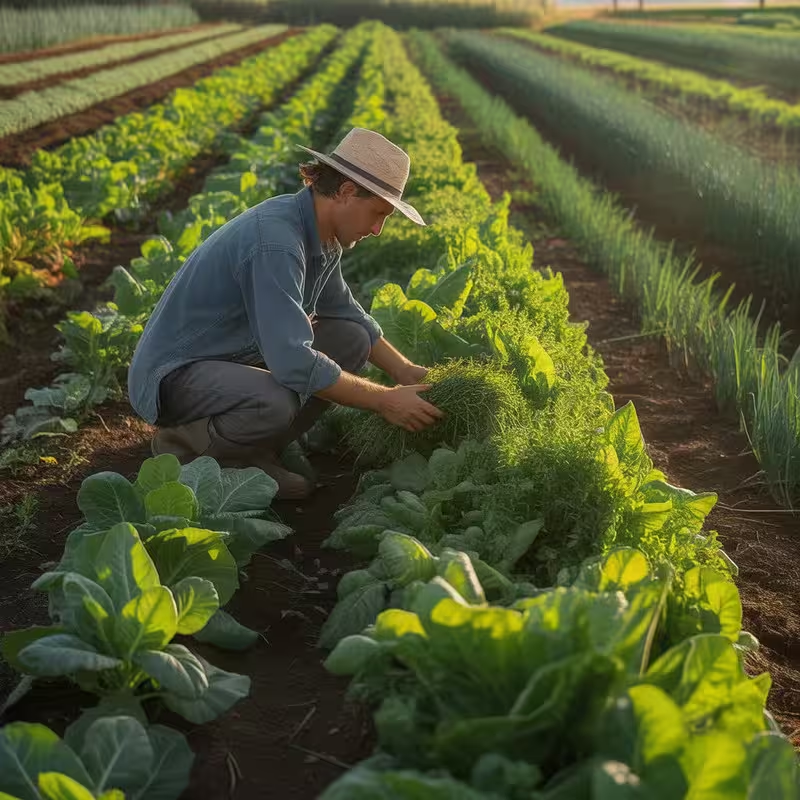
One of the simplest ways to build soil in place is the chop-and-drop method. This means cutting back plants, leaving them on the soil surface and letting nature do the rest.
Why It Works
- Mimics natural ecosystems where plant material replenishes soil.
- Retains moisture by reducing evaporation.
- Encourages earthworm activity which improves soil aeration.
According to Dr. Elaine Ingham, a leading soil microbiologist, “Soil health depends on continuous organic matter input, which supports microbial diversity”. This way nutrients stay in the system.
Actionable Tip
Use a sharp knife or pruners to cut plants at the base. Spread the cut material evenly over the soil. Over time it will break down and enrich the soil naturally.
Cover Crops: The Living Fertilizer
Cover crops aren’t just for big farms – they work wonders in home gardens too. These plants prevent soil erosion, suppress weeds and provide a steady supply of organic matter.
Best Cover Crops for Soil Fertility
- Legumes (clover, vetch, peas): Fix nitrogen into the soil.
- Grasses (rye, barley): Build organic matter and suppress weeds.
- Deep rooted plants (daikon radish, comfrey): Break up compacted soil and bring up minerals.
A 10 year study by Cornell University found that cover cropping increased soil carbon by 32% and improved nutrient availability.
Actionable Tip
Plant cover crops at the end of the growing season. Instead of pulling them out, cut them at the base and leave the roots in the soil. This method naturally feeds microbes and maintains soil structure.
Soil Feeding with Natural Amendments
Instead of hauling compost, feed your soil with organic amendments that break down in place.
Best Natural Soil Builders
- Grass clippings: High in nitrogen, decompose quickly.
- Wood chips: Slow-release carbon source that enhances microbial diversity.
- Eggshells and banana peels: Provide calcium and potassium.
A study by the University of California shows that wood chips increase soil fungal networks, which are key to nutrient uptake (source).
Tip
Layer these on top of the soil. Over time they will integrate into the soil and improve fertility with no extra work.
Conclusion
O farming offers a way to build soil health without the compost piles. By leaving organic matter in place we mimic the most efficient nutrient cycle in nature.
The benefits are clear: less work, healthier soil, faster growth. Whether through chop-and-drop, cover cropping or direct mulching these methods make soil building easy.
So are we ready to rethink composting? Instead of seeing waste we can see an opportunity to add fertility to the soil exactly where it’s needed. Try these, observe the results and let the soil tell its own success story.


